

Advancements in Mobile Crane Technology
Tracing the Evolution of Mobile Cranes: A Journey of Innovation
The history of mobile cranes is a testament to human ingenuity and the relentless pursuit of progress in the construction industry. From their humble steam-powered beginnings to the high-tech giants of today, mobile cranes have undergone a remarkable transformation that has revolutionized the way we build.
Early Beginnings: Steam-Powered Cranes
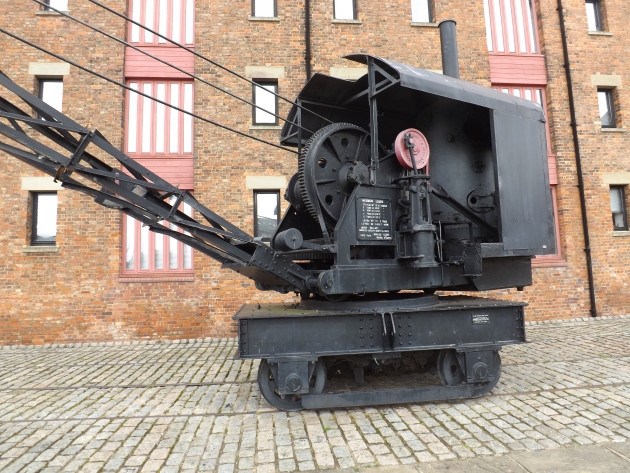
In the mid-19th century, cranes were largely stationary, with some exceptions like railroad cranes mounted on flatcars. However, it was Appleby Brothers who introduced the first steam-powered cranes in Paris in 1867 and Vienna in 1873. These early models were groundbreaking but limited by their mobility and lifting capacity[1][2].
The Advent of Diesel Engines and Hydraulics
The 1920s marked a significant turning point with the adoption of internal combustion engines, which replaced steam power. This innovation was followed by the introduction of hydraulic systems, which dramatically enhanced the power and versatility of mobile cranes[1][5]. The integration of these technologies allowed cranes to handle more complex and weighty tasks, transforming construction methodologies worldwide.
Telescopic Booms: A Game-Changer
The 1950s saw the introduction of telescopic booms, a groundbreaking innovation that expanded cranes' capabilities. These booms enabled cranes to reach previously unattainable heights and distances, significantly increasing their lifting capacity. The development of all-terrain models further expanded the scope of construction projects, allowing cranes to navigate diverse and challenging terrains[1][2].
Modernization and Digitalization
The advent of the digital era marked a transformative phase in mobile crane technology. Sophisticated computerized control systems and automation were integrated, fundamentally redefining the operational capabilities of cranes. Modern cranes, equipped with advanced digital interfaces, can undertake intricate and complex construction tasks with unprecedented precision and efficiency[1].
Key Milestones
- 1922: The introduction of internal combustion engines and the first truck-mounted cranes.
- 1947: The invention of the world's first hydraulic truck-mounted crane by Hiab.
- 1959: The integration of hydraulic systems, which modernized cranes.
- 1962: The Coles Hydra Speedcrane was introduced.
- 1966: The 10-ton fully telescopic hydraulic boom was developed.
- 1968: The 30-ton "Husky" military versions with four-wheel drive were introduced.
- 1976: The Cosmos team created a 25-ton crane combining several new developments[1][5].
These advancements have not only streamlined operations but have also significantly enhanced safety and precision in construction work. The incorporation of automation and digital control systems represents a major leap forward in crane technology, aligning it with the demands of contemporary construction projects and setting new standards in the industry.
In summary, the evolution of mobile cranes has been a continuous process of innovation, driven by the need to meet the ever-expanding demands of the construction industry. From their humble beginnings to the modern marvels of today, mobile cranes have become indispensable tools in building the intricate and towering structures that define our skylines.
Source: [https://apcranetraining.com/blogs/tracing-the-evolution-of-mobile-cranes.php](https://apcranetraining.com/blogs/tracing-the-evolution-of-mobile-cranes.php)